
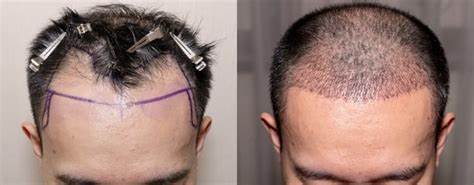
Hair loss can significantly impact an individual’s self-esteem and confidence, leading many to seek effective solutions such as hair transplant procedures. Follicular Unit Transplantation (FUT) has been the gold standard in hair transplant procedures for decades.
However, advancements in the FUT technique have made it even more precise and efficient. Improved harvesting and implantation techniques have led to faster healing and more natural-looking results, making FUT a preferred choice for many hair restoration candidates.
Follicular Unit Extraction (FUE): Revolutionizing Hair Transplantation
Follicular Unit Extraction (FUE) emerged as a game-changer in hair transplantation, transforming the way hair follicles are harvested. Unlike FUT, which involves a linear strip excision, FUE involves the extraction of individual hair follicles using micro punches.
With no linear scar, FUE offers a scarless and minimally invasive procedure, making it an attractive option for those who prefer shorter recovery periods and the freedom to wear shorter hairstyles.
Robotic Hair Transplant: Precision at Its Finest

Robot-assisted hair transplant procedures have taken hair restoration to a whole new level of precision. Robotic systems use artificial intelligence and advanced algorithms to identify and extract hair follicles with unparalleled accuracy.
These sophisticated machines can make thousands of graft extractions in a single session, reducing the overall procedure time and enhancing the graft survival rate. Robot-assisted hair transplants are revolutionizing the field, offering patients optimal results with minimal invasiveness.
Platelet-Rich Plasma (PRP) Therapy: Boosting Hair Growth
Platelet-Rich Plasma (PRP) therapy has gained traction as an innovative adjunct to hair transplant procedures. This technique involves extracting the patient’s blood, processing it to concentrate the platelets, and injecting the enriched plasma into the scalp. When combined with hair transplant procedures, PRP therapy enhances graft survival and accelerates the healing process, ensuring more robust hair growth.
Acellular Dermal Matrices (ADM): Augmenting Hair Transplant Results
Acellular Dermal Matrices (ADM) have become increasingly popular as an adjunct to hair transplant procedures. ADMs are derived from human or animal tissues with cellular components removed, leaving behind a supportive matrix.
When used in hair transplantation, ADMs can enhance graft survival, promote faster healing, and improve overall hair transplant outcomes. These matrices provide structural support and nourishment to the grafts, leading to more successful hair growth.
Trichophytic Closure Technique: Concealing Donor Scars
For those who have undergone FUT procedures in the past and are concerned about visible donor scars, the trichophytic closure technique offers an innovative solution. This advanced closure technique involves trimming the skin edges during the incision, allowing the hair to grow through the scar, effectively concealing it.
The trichophytic closure technique has revolutionized the way FUT scars are managed, significantly reducing their visibility and providing patients with increased confidence.
Artificial Hair Implants: Exploring Future Possibilities
Artificial hair implants involve implanting synthetic hair fibers that mimic natural hair into the scalp. While this technology is still in its early stages, it has the potential to offer a non-surgical option for hair restoration, making it an exciting area of research in the field.
Laser Hair Transplant: Precise and Painless
Laser hair transplant is an innovative technique that uses laser technology to aid in hair transplantation. The laser is used to create tiny incisions in the recipient area, making the procedure more precise and minimally invasive. Additionally, laser therapy can stimulate hair follicles, promoting hair growth and improving the overall success of the transplant.
Direct Hair Implantation (DHI): Enhancing Implantation Precision
The use of specialized instruments ensures minimal handling of the grafts, leading to faster healing and higher graft survival rates.
Hair Cloning: A Revolutionary Breakthrough
Hair cloning, also known as hair multiplication or hair regeneration, is a revolutionary breakthrough in hair restoration research. While still in the experimental phase, hair cloning holds immense promise for future hair transplant procedures.
Minimally Invasive Hair Transplant: Tiny Incisions, Significant Results
Minimally invasive hair transplant techniques utilize smaller incisions, leading to less scarring and quicker recovery times. The procedure can be performed using FUE or FUT methods, and its emphasis on minimal trauma to the scalp ensures a more comfortable experience for the patient.
Preventive Hair Transplant: Addressing Hair Loss Early
Preventive hair transplant is an emerging trend that aims to address hair loss at an early stage to prevent further progression. It involves transplanting hair into areas that show signs of thinning before significant hair loss occurs. This proactive approach can yield natural-looking results and halt hair loss progression effectively.
Remote Robotic Hair Transplant: Expanding Access to Expertise
Remote robotic hair transplant is an innovative approach that allows skilled hair transplant surgeons to perform procedures remotely. This technique leverages real-time communication and robotic technology, enabling patients in remote locations to access the expertise of experienced surgeons without the need to travel. This advancement has significantly expanded access to quality hair transplant services for a broader population.
Conclusion:
In conclusion, the field of hair transplantation has witnessed remarkable advancements in surgical approaches and innovative techniques. From the evolution of FUT and FUE to the precision of robotic hair transplants, each innovation has revolutionized the way hair restoration is performed. Additionally, adjunct therapies such as PRP and stem cell therapy have shown promising results in enhancing the overall outcomes of hair transplant procedures.