

Over the years, the field of hair transplant techniques has witnessed incredible advancements, leading to more natural-looking results. From the early days of punch grafts to the introduction of strip harvesting and the rise of follicular unit extraction (FUE), the evolution has been remarkable. This article explores the journey of hair transplant techniques, revealing the innovations that have revolutionized the industry and paved the way for seamless, natural-looking hair restoration.
The Early Days: Punch grafts and the birth of hair transplantation
In the early days of hair transplantation, the technique of punch grafts played a significant role in hair restoration. This method involved removing round grafts of skin with hair follicles from the donor site and implanting them into the recipient area.
Although punch grafts were effective, they often resulted in a noticeable “pluggy” appearance. However, they marked the birth of hair transplantation and paved the way for future advancements in the field.
Strip Harvesting: The shift towards follicular unit transplantation (FUT)
To achieve more natural-looking results, the hair transplant field witnessed a significant shift with the introduction of strip harvesting. This technique, also known as follicular unit transplantation (FUT), involved removing a strip of scalp from the donor area and dissecting it into individual follicular units for transplantation.
FUT allowed for more precise and strategic placement of grafts, resulting in a more natural appearance and improved hair density.
The Rise of Follicular Unit Extraction (FUE): Minimally invasive hair transplant surgery
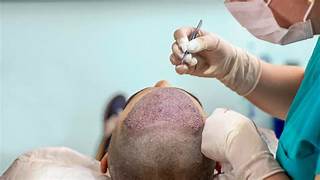
As the demand for less invasive procedures grew, the rise of Follicular Unit Extraction (FUE) revolutionized hair transplant surgery. FUE involves individually harvesting hair follicles from the donor area using a specialized instrument.
This technique eliminates the need for a linear incision, resulting in minimal scarring and a faster recovery time. FUE has gained popularity due to its ability to provide natural-looking results and accommodate patients who prefer shorter haircuts.
Robotic Hair Transplantation: The precision of technology in achieving natural results
Robotic hair transplantation has marked a significant advancement in the field, combining the precision of technology with the art of hair restoration. With robotic systems like the ARTAS, surgeons can meticulously and accurately extract and implant hair follicles, ensuring precise placement and natural-looking results.
Robotic hair transplantation minimizes human error, enhances efficiency, and allows for customization based on each patient’s unique hair characteristics, leading to optimal outcomes.
Platelet-Rich Plasma (PRP): Enhancing hair transplant outcomes
The use of Platelet-Rich Plasma (PRP) therapy has emerged as a valuable adjunct to hair transplant procedures, enhancing outcomes and promoting hair growth. PRP involves extracting a patient’s blood, separating the platelet-rich plasma, and injecting it into the recipient and donor areas during a hair transplant procedure.
The growth factors present in PRP stimulate hair follicles, improve healing, and promote thicker, healthier hair growth, ultimately enhancing the overall results of the transplant.
ARTAS System: Revolutionary robotic-assisted FUE for precise hair restoration
The ARTAS System has revolutionized the field of hair restoration by introducing robotic-assisted Follicular Unit Extraction (FUE). This cutting-edge technology combines precision and automation to enhance the accuracy and efficiency of hair transplant procedures.
The ARTAS System uses advanced algorithms and artificial intelligence to identify and extract healthy hair follicles for transplantation. This innovative approach ensures precise graft placement and natural-looking results, providing patients with a reliable and effective treatment option for hair restoration.
Trico pigmentation: A non-surgical option to simulate the appearance of hair
Trico pigmentation is a non-surgical technique that offers an alternative solution for simulating the appearance of hair. It involves the application of specialized pigments to the scalp, creating the illusion of a closely shaved or fuller head of hair.
Trico pigmentation is particularly beneficial for individuals who may not be eligible for hair transplant surgery or who prefer a non-invasive option. This technique provides a temporary yet realistic solution for those seeking a natural-looking hairline and improved hair density.
Combining Techniques: Customizing treatments for optimal results
Combining different hair transplant techniques has become a common approach to customize treatments for optimal results. By utilizing a combination of methods such as FUT, FUE, and PRP therapy, hair restoration specialists can tailor the treatment to suit each patient’s unique needs.
This approach allows for a more comprehensive and individualized solution that addresses specific concerns, maximizes hair growth, and ultimately achieves natural-looking results with improved hair density and coverage.
Conclusion:
In conclusion, the evolution of hair transplant techniques has greatly advanced the field of hair restoration, enabling individuals to achieve more natural-looking results. As technology continues to progress, the future of hair transplant techniques holds promise for even more seamless and effective options, offering hope and confidence to those seeking to restore their hair and enhance their appearance.