
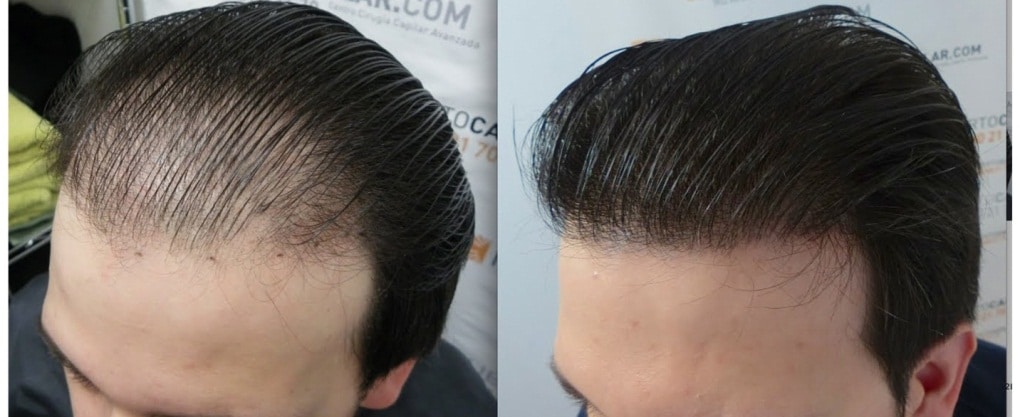
Hair loss is a common issue affecting men and women of varying ages. Many people have tried different hair growth treatments including topical creams, medications, and shampoos with little to no success. However, in recent years, hair transplant surgery has become a popular and effective solution for hair loss. In this article, we will discuss the different hair plant surgery techniques available and their pros and cons.
Different Hair Plant Surgery Techniques Benefits
- Follicular Unit Extraction (FUE): This technique involves removing individual hair follicles from the scalp and transplanting them into areas where hair is thinning or balding. FUE is minimally invasive and leaves no visible scars, making it a popular option for those who prefer a less invasive procedure.
- Follicular Unit Transplantation (FUT): This technique involves removing a strip of hair-bearing skin from the scalp and then dividing it into individual hair follicles for transplantation. FUT can transplant a larger number of grafts in a single session than FUE, making it a good option for those who need extensive hair restoration.
- Robotic Hair Transplant: This technique utilizes state-of-the-art robotics technology to perform the hair transplant surgery. The robotic system can target and extract individual hair follicles with great precision, which minimizes the risk of damaging surrounding tissue.
- Platelet-Rich Plasma (PRP): This technique involves injecting platelet-rich plasma, a highly concentrated form of the patient’s own blood, into the scalp to promote hair growth. PRP can be used in conjunction with other hair transplant techniques to boost results.
Follicular Unit Transplantation (FUT)
Follicular Unit Transplantation (FUT) is a hair transplant technique where a strip of skin is removed from the back of the head, and hair follicles are harvested from the strip. This technique is also called strip harvesting.
FUT is a relatively simple and straightforward procedure. It can be performed under local anesthesia, and the patient can go home the same day. FUT is an effective technique for people who have significant hair loss, but it leaves a linear scar on the back of the head. This scar can be visible when the hair is cut short.
Pros
- FUT is a relatively faster procedure compared to other techniques.
- It allows for a larger number of transplanted hair follicles.
- FUT has a higher success rate and lasting results than other techniques.
- FUT is a more cost-effective option than other transplant techniques.
Cons
- FUT involves the removal of a strip of skin from the scalp, which requires a longer healing process and may leave a visible scar.
- Patients who desire short haircuts may have difficulty hiding the scar.
- FUT may require more recovery time compared to other techniques.
Follicular Unit Extraction (FUE)
Follicular Unit Extraction (FUE) is a hair transplant technique where individual hair follicles are extracted from the donor area using a punch-like tool.
FUE is a more advanced technique than FUT. FUE is an effective technique for people who have limited hair loss, and it produces natural-looking results.
Pros
- FUE also requires less recovery time than FUT since the incisions are smaller.
- Patients can wear their hair short without worrying about visible scars.
Cons
- FUE is a longer procedure compared to FUT, taking several hours to complete.
- It may not be suitable for patients with significant hair loss since it is more difficult to extract large numbers of hair follicles.
- FUE may also be more costly than FUT since it requires more skill and precision.
Direct Hair Implantation (DHI)
Direct Hair Implantation (DHI) is a hair transplant technique where hair follicles are extracted from the donor area and implanted directly into the recipient area using a special device called a Choi Implanter Pen.
DHI is a minimally invasive procedure that produces natural-looking results. DHI is an effective technique for people who have limited hair loss.
Pros
- DHI allows for more precise implantation of hair follicles and a more natural-looking hairline.
- It is less invasive than FUE since the incisions are smaller.
- DHI results in less scarring and a faster healing process.
Cons
- It is a time-consuming process since the surgeon has to implant each hair follicle individually.
- DHI requires a highly skilled surgeon, which can make it more expensive than other hair transplant techniques.
Robotic Hair Transplantation
Robotic Hair Transplantation is a hair transplant technique where a robotic device is used to extract hair follicles from the donor area and transplant them to the recipient area. The robotic device uses artificial intelligence and algorithms to select the best hair follicles for transplantation.
Robotic Hair Transplantation is a highly precise and accurate technique. It produces natural-looking results, and it is a minimally invasive procedure.
Pros
- Robotic hair transplantation is a less invasive procedure since it utilizes precision robotics.
- The robotic systems allow for more precise follicle extraction, reducing the potential for graft damage and improving overall results.
- Robotic systems automate many of the repetitive and labor-intensive tasks, reducing the surgeon’s workload.
Cons
- Robotic hair transplantation is a more expensive procedure than other techniques.
- The robotic systems in use have their limitations, and they may not be compatible with all hair types and skin colors.
CONCLUSION
In conclusion, the hair plant surgery technique you choose will depend on various factors, including cost, recovery time, extent of hair loss, and the surgeon’s expertise. It is critical to consult with a skilled surgeon before deciding on a hair transplant technique to ensure the best results.