
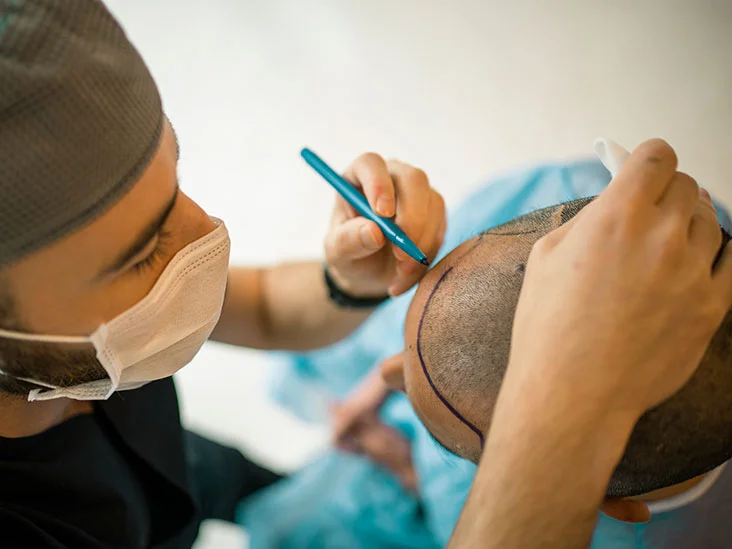
Hair transplant surgery, also known as hair restoration surgery, is the process of moving hair from one part of the body, called the donor area, to a bald or balding area of the scalp, known as the recipient area. The hair is usually taken from the back or sides of the head, where it is naturally fuller, and grafted onto the bald or thinning areas on the top of the head.
Types of Hair Transplant Surgery
Follicular Unit Transplantation (FUT)
FUT, also known as strip harvesting, is a surgical method that involves the removal of a thin strip of scalp from the donor area, which is then divided into individual grafts. The grafts are then transplanted onto the recipient area of the scalp. FUT typically leaves a linear scar on the donor area, which can be covered with longer hair.
Follicular Unit Extraction (FUE)
FUE is a minimally invasive surgical method that involves the removal of individual follicular units directly from the donor area using a special punch tool. The follicular units are then transplanted onto the recipient area of the scalp. FUE leaves tiny dots in the donor area, which are usually not visible once the hair has grown out.
What to Consider Before Undergoing Hair Plant Surgery
While hair transplant surgery is generally considered a safe and effective treatment for hair loss, there are several factors to consider before undergoing the procedure:
Candidacy
Before undergoing hair transplant surgery, it is important to determine whether you are a good candidate for the procedure. Good candidates typically have sufficient donor hair, a healthy scalp, and realistic expectations for the results. People with advanced hair loss or an underlying medical condition may not be suitable candidates for the procedure.
Cost
Hair transplant surgery can be a costly procedure, with the cost varying depending on several factors, including the number of grafts required, the experience and skill of the surgeon, and the type of surgery performed. It is important to consider the cost of the procedure and whether it fits within your budget.
Risks and Benefits
Like any surgical procedure, hair transplant surgery carries risks and potential complications, such as bleeding, infection, and scarring. It is important to also weigh the potential benefits, which include a more youthful appearance, increased confidence, and a long-lasting solution to hair loss.
Recovery Time
Hair transplant surgery requires a period of recovery, during which you may experience some discomfort, swelling, and scabbing around the transplant site. It is important to consider the recovery time and how it may affect your work or other responsibilities.
The Hair Transplant Surgery Process
Consultation
The first step in the hair transplant surgery process is the consultation, during which you will discuss your goals and expectations with the surgeon, and undergo a physical examination and evaluation of your scalp and hair density.
Preparation
Before the surgery, you may be given instructions to follow, such as avoiding certain medications or preparing your hair and scalp for the procedure. You will also need to arrange for someone to accompany you to and from the surgery.
Procedure
The hair transplant surgery procedure usually begins with the administration of local anesthesia to the scalp. The surgeon will then use either the FUT or FUE method to extract the donor hair and grafts, which are then implanted onto the recipient site using a small needle or blade.
Recovery
After the surgery, you will need to follow the post-operative instructions provided by the surgeon, which may include medication, rest, and avoiding certain activities. You may experience some redness and swelling in the scalp, which typically subsides within a few days to a week. The transplanted hair may begin to fall out within the first few weeks, but will begin to regrow within a few months.
Conclusion
Hair transplant surgery can be a safe and effective treatment for hair loss, but it is important to carefully consider the risks, benefits, and costs before undergoing the procedure. With proper planning and care, it is possible to achieve a natural-looking, permanent solution to hair loss that can improve your confidence and quality of life.